
Last Updated:
Commercial land clearing is different from clearing a home lot because the plan sheet, not the owner’s eye, decides what comes off. A retail pad, an office site, a solar array or a utility corridor each arrives with clearing limits, preserved trees, a stormwater plan and a grading contractor waiting on the result. Homestead Land Clearing offers commercial site clearing across Frisco and the surrounding Collin and Denton county growth corridor, with the work done by licensed and insured contractors. The job is narrow and specific: remove the trees, brush and stumps inside the approved limits, grub the areas that will carry buildings or paving, put the erosion controls in before the ground opens, and hand the site to the next trade at a finish everyone agreed on. Grading, cut and fill, building pads and pond excavation are not part of it. Those belong to the earthwork contractor.
What happens on the first visit
Commercial sites follow the same four steps as any job, with the civil plans in hand.
- Walk the property. Clearing limits against the plan, preserved trees, slopes, wet areas, existing fences, and anything buried or overhead: gas and water service, abandoned wells, power lines along the frontage.
- Check the rules for that address. Tree survey and permit status, creek or floodplain limits, which TCEQ stormwater category the disturbed acreage falls into, and utility locates through Texas811. In Frisco, the City locates its own lines separately for permitted work in right-of-way and easements.
- Write the scope. Method, finish level, grubbing areas, debris plan and erosion control, in writing, before a price.
- Clear and hand off. The site is left at the agreed finish, ready for the grading contractor or for seeding.
Frisco’s tree survey comes before any machine
Frisco treats a commercial tract very differently from a platted home lot. The City requires a Tree Removal Permit to remove any tree, regardless of size or species, except on single-family or two-family lots inside a plat of record. Commercial land is never that exception. The tree survey has to be prepared by an arborist or a Texas-licensed landscape architect and submitted with site plans, grading plans and civil sets. Nothing comes down until the survey or preservation plan is approved, mitigation is paid or planned, and the permit is issued. Even with an early grading permit, the City’s Landscape Architect has to field-verify the trees before clearing, and 4-foot protective fencing at the drip line of preserved trees is inspected before the preconstruction meeting.
Protected trees are 6 inches or more in diameter at 4.5 feet (4 inches inside the riparian buffer). Replacement scales with size: 100 percent of the removed inches for 6 to 12 inch trees, 150 percent for 12.1 to 20 inches, and 300 percent above 20. The City’s development fee schedule lists tree survey review at $0, but mitigation is real money: the cash value per inch is set annually by the City and is not published, so it stays a budget line to confirm, not a figure to assume. The Frisco tree removal permit guide walks through the full process. Neighboring towns write their own rules, and Prosper, for instance, keeps a separate excluded-species list covered on the Prosper service area page.
Floodplain is the other trap. Removing trees or other vegetation in Frisco’s base floodplain or floodway needs a grading permit or a City letter of approval. Fines run $300 per caliper inch per tree and $300 per 100 square feet of vegetation, up to $2,000 per offense, and the City’s code makes the contractor and subcontractor liable along with the owner. That is one reason a clearing scope on a creek-side site names its limits so precisely. Clearing near creeks and floodplain covers the buffer rules.
Stormwater: small site, large site and silt fence first
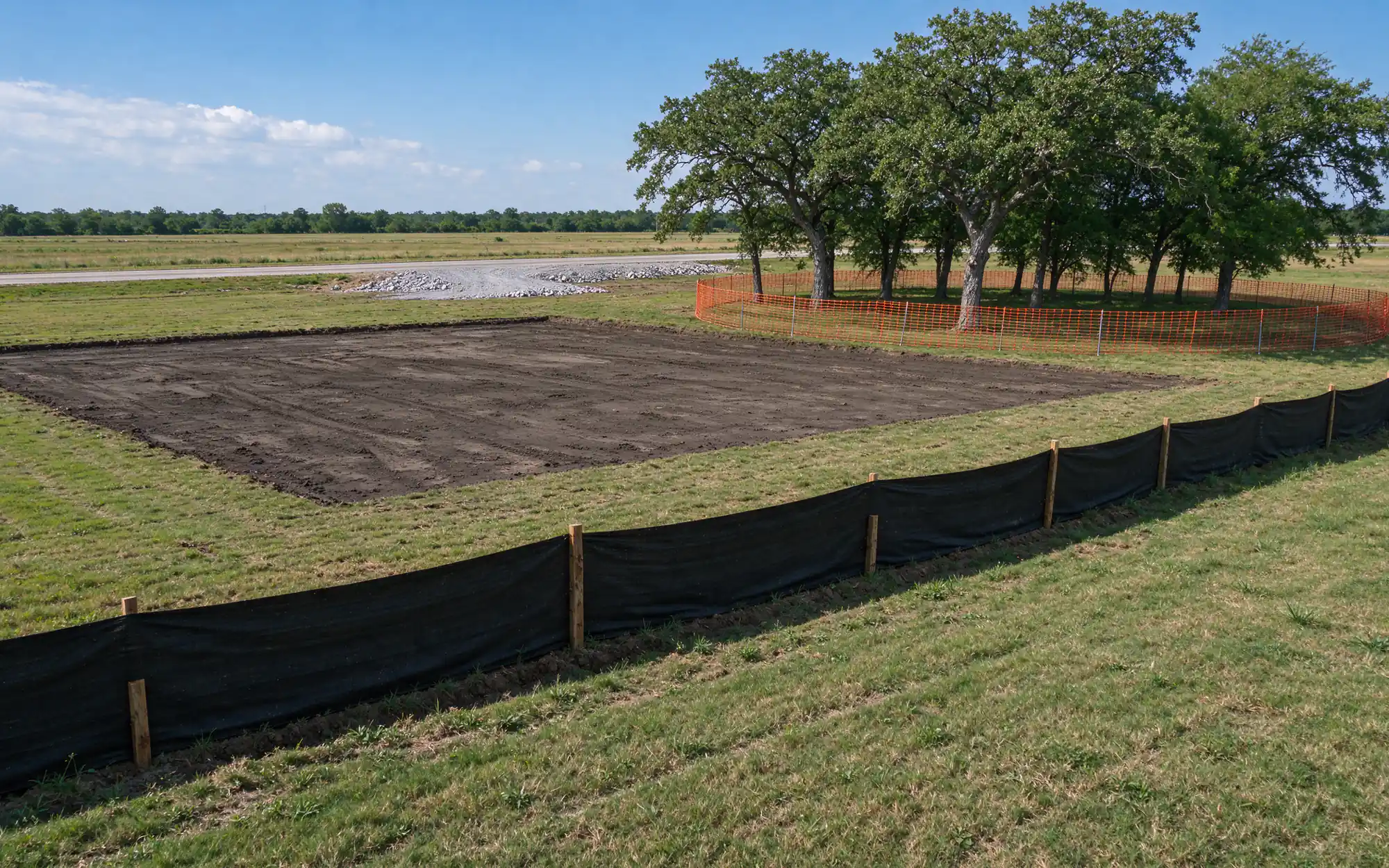
The TCEQ Construction General Permit, TXR150000, covers construction that disturbs one acre or more. Clearing is disturbance, so it counts. From 1 to under 5 acres, a project is a small site. Five acres or more is a large site, and the operators file a Notice of Intent. TCEQ’s NOI fee is $225 filed electronically or $325 on paper. Acreage is counted across a common plan of development, so a 3-acre phase of a larger subdivision can fall under large-site rules. Either way, the stormwater pollution prevention plan has to be developed and put in place before construction begins, which means the perimeter controls go in before the first tree falls. The guide to the stormwater permit for land clearing explains who files what.
Frisco adds its own layer. Every owner must keep silt from leaving the property for streets, drainage facilities or neighbors, the contractor must take whatever measures are needed, and the City can refuse permits or inspections where erosion control is missing, with fines up to $500 a day. On Houston Black clay, which dominates Frisco soils, bare ground sheds fine sediment quickly in a hard rain.
Silt fence is the usual first line. On Texas Department of Transportation projects in the Dallas district, which includes Collin and Denton counties, installed silt fence runs about $3.50 to $5 per linear foot, and removal about $1 per foot. Short runs on smaller sites can cost more per foot. Where cleared ground will sit open, hydroseeding is the common follow-up: HomeGuide’s national range is $0.12 to $0.35 per square foot, and large TxDOT projects in North Texas run about $0.05 to $0.30. Both are offered as add-ons here. Erosion control after land clearing compares the options.
Sequencing clearing with the earthwork trade
Clearing that runs too far ahead of grading leaves bare clay exposed to rain. Clearing that runs behind leaves a dozer crew idle. The useful middle is a schedule built from the grading contractor’s phases. NOAA’s 1991 to 2020 normals for DFW Airport put the wettest months in May (4.78 inches) and October (4.37 inches), with July and August the driest. A tract cleared in late April and graded in June spends the wettest stretch of the year as open mud.
Grubbing depth and limits are the other hand-off point. Under buildings, paving and utility trenches, stumps, roots and buried organics come out, because decaying wood leaves voids under structures. Outside those areas, grinding stumps low or forestry mulching brush is often enough and keeps more soil covered. The clearing vs grubbing guide explains the difference, and the clearing and grubbing service covers the structural work in detail. Stump extraction with a machine usually disturbs soil 16 inches deep or more, which Texas law treats as excavation needing a Texas811 notice at least 48 hours ahead, excluding weekends and holidays.
Solar, utility and roadway work
Solar fields and utility corridors change the finish. An array needs an even surface that pile drivers and maintenance mowers can cross, and often keeps groundcover to limit bare soil across a large footprint. A roadway or utility corridor needs a clean, consistent width with stumps handled to the line the engineer sets. Power lines along those corridors belong to the utility. Stay and keep materials at least 10 feet from overhead high-voltage lines, and contact Oncor before work near its lines. Clearing near utilities and power lines and easement clearing cover the details.
What commercial land clearing costs
There is no honest per-acre figure for commercial clearing in general. The scope varies too much: tree size, how much area is grubbed versus mulched, the number of preserved trees that slow the work, erosion control quantities, mobilization of large equipment and how far debris travels. Those drivers decide the number.
One public data point shows the spread. A public bid by a Collin County municipal utility district for 75 acres of subdivision site work drew clearing-and-grubbing prices of about $500 to $3,200 per acre. That was development-scale work on largely open land, priced inside a much larger excavation bid, so it sets a floor for big open tracts rather than a rate for wooded commercial pads.
Disposal is published locally. North Texas Municipal Water District charges $80 per ton at its transfer stations and $52 per ton at the 121 Regional Disposal Facility, each with a one-ton minimum. Inside Frisco city limits, only the City’s contracted hauler may place roll-off containers, at $357.95 per haul plus disposal by the ton, $108.87 delivery, $4.47 per day and a $1,000 deposit (City of Frisco). Burning is rarely an option: Collin and Denton are in the DFW ozone nonattainment area, where TCEQ allows burning land-clearing debris only when no practical alternative exists. Land clearing debris removal covers the hauling side, and the land clearing cost per acre guide sets out the published residential ranges. Before comparing bids, check them against what a land clearing quote should include, because commercial bids for the same site can differ widely when bidders read the scope differently.
What's included
- A site walk against the civil plans to confirm clearing limits, preserved trees, staging areas and access points
- A check of the rules for the tract: tree survey and permit status, floodplain limits, stormwater permit coverage and utility locates
- A written scope listing clearing method, grubbing areas, finish level, debris plan and erosion control items
- Felling and removal of trees and brush inside the approved limits
- Grubbing of stumps, roots and buried organics from building, paving and utility areas
- Debris chipped, mulched in place outside structural areas, or hauled to a permitted facility
- Silt fence installation and seeding as add-ons where the stormwater plan calls for them
- Hand-off of the cleared area to the grading or excavation contractor at the agreed finish
How the clearing scope changes with the end use of a commercial site
| Buildings and paving | Solar array field | Pond or detention basin footprint | |
|---|---|---|---|
| What has to come off | All trees, brush, stumps and roots inside the pad, parking and drive limits | Trees and brush across the array; anything tall enough to shade panels later | All vegetation inside the excavation limits shown on the plan |
| Stumps and roots | Grubbed out; rotting wood under concrete leaves voids | Ground low or removed so pile drivers and mowers can work; extent set by the array designer | Grubbed with the vegetation, since the excavation trade digs through that ground next |
| Finish handed off | Bare, grubbed soil for the grading contractor | Low, even surface with groundcover kept where the plan allows | Cleared footprint for the excavation contractor |
| Erosion control focus | Perimeter silt fence and construction exits before disturbance | Keeping groundcover to limit bare soil across a large area | Protecting the downstream channel the basin will drain to |
| Main local constraint | Frisco tree survey approval and mitigation | Large disturbed acreage, so TCEQ large-site rules often apply | Floodplain and creek limits near the outfall |
Related resources
- LearnDo you need a stormwater permit for land clearing in Texas?
- LearnHow do you control erosion after land clearing?
- LearnWhen do you need a City of Frisco tree removal permit?
- LearnHow do you clear land safely near power lines and buried utilities?
- LearnCan you clear land in a floodplain or near a creek?
- Decision GuideWhat is the difference between clearing and grubbing?
- Decision GuideWhat should a land clearing quote include?
Representative photos of this work
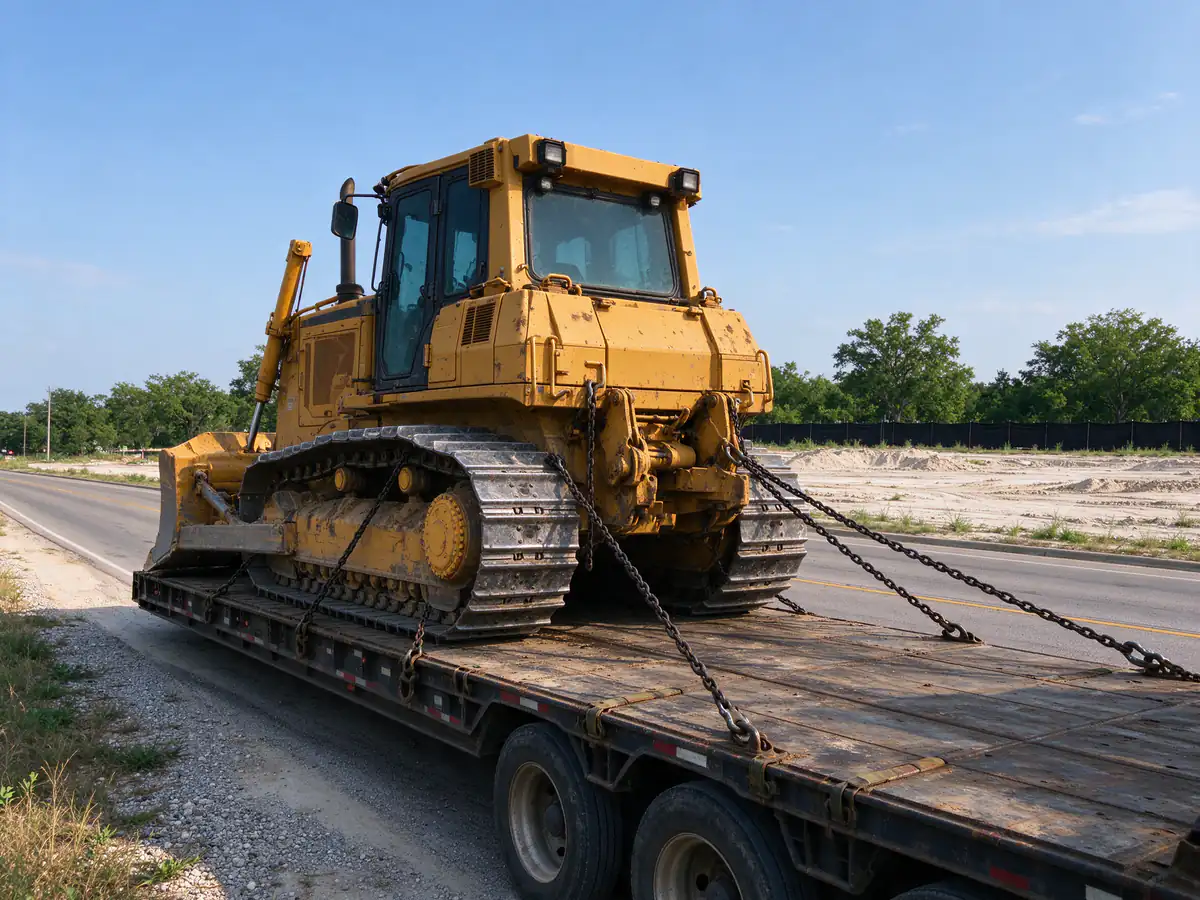
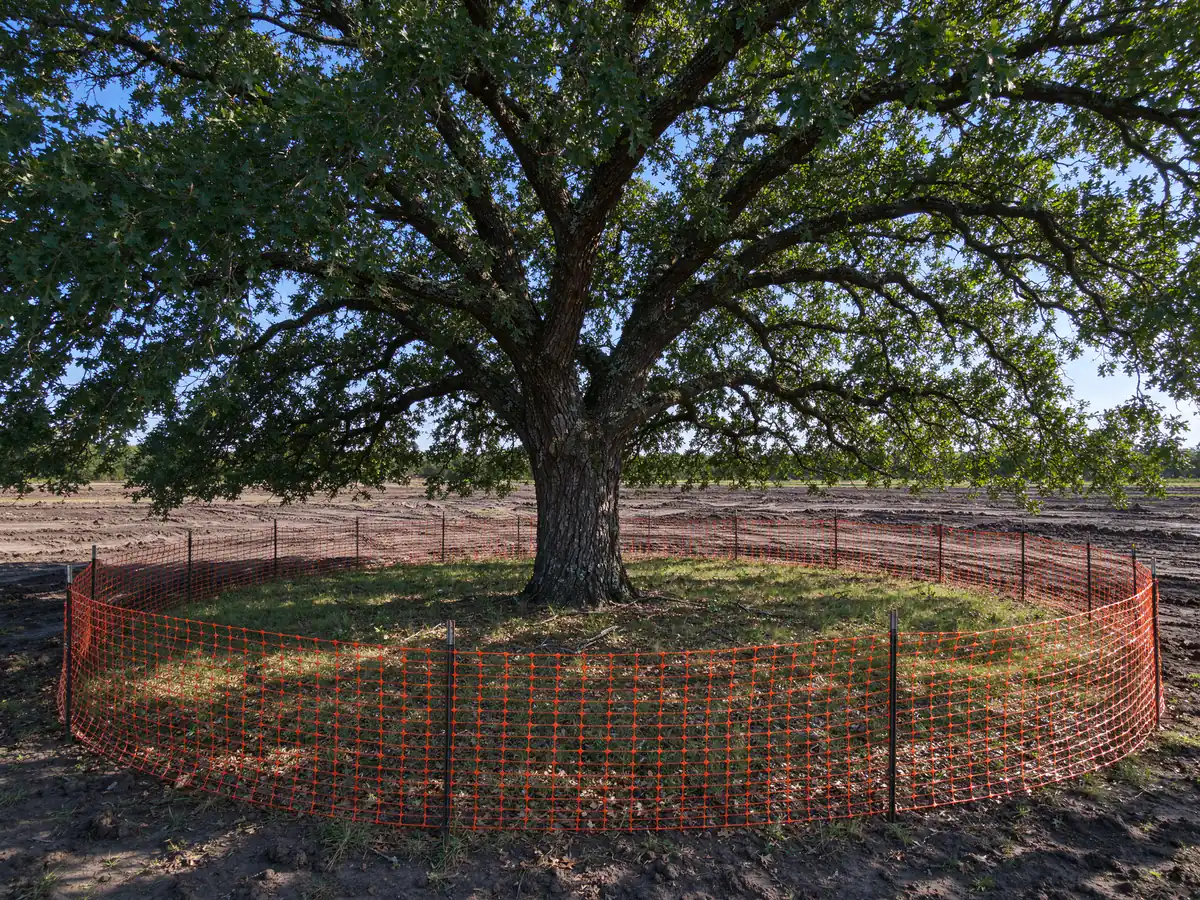
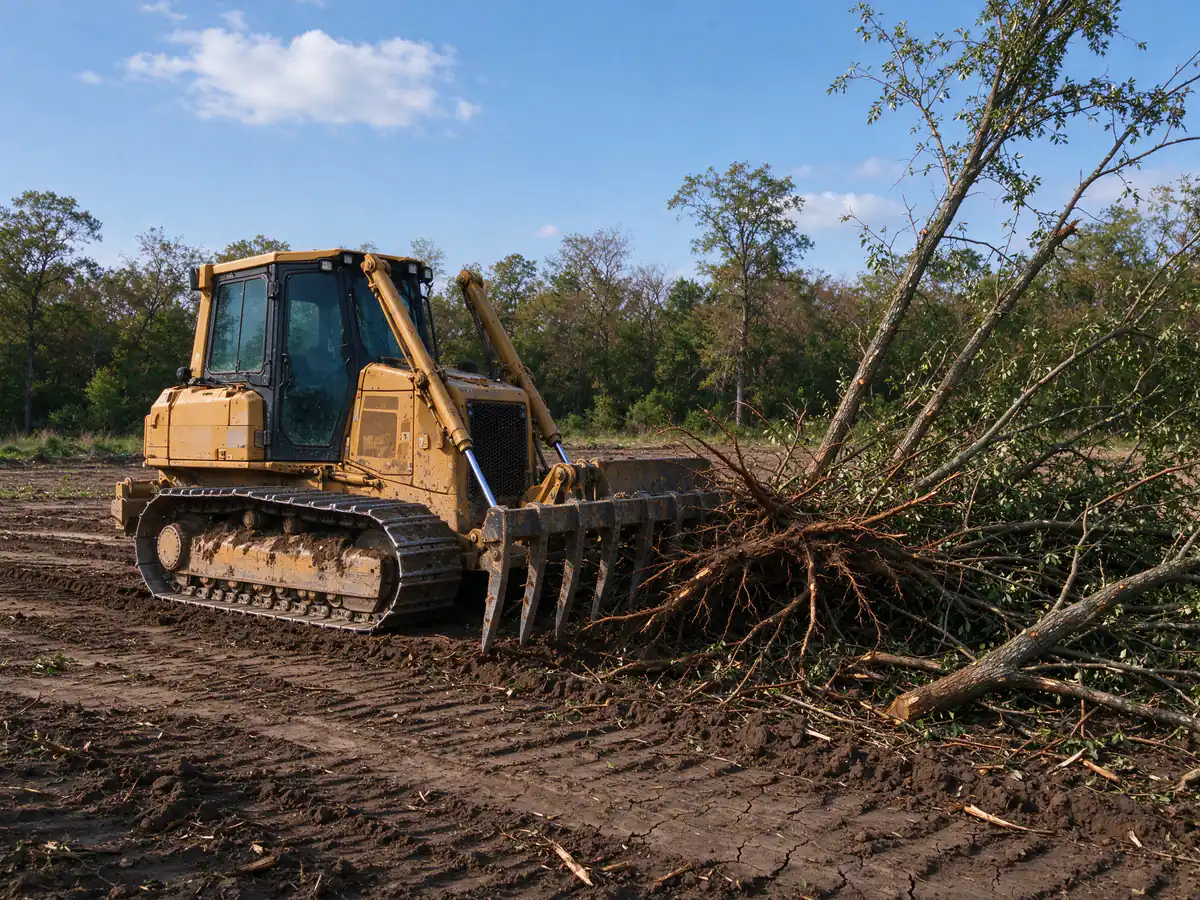
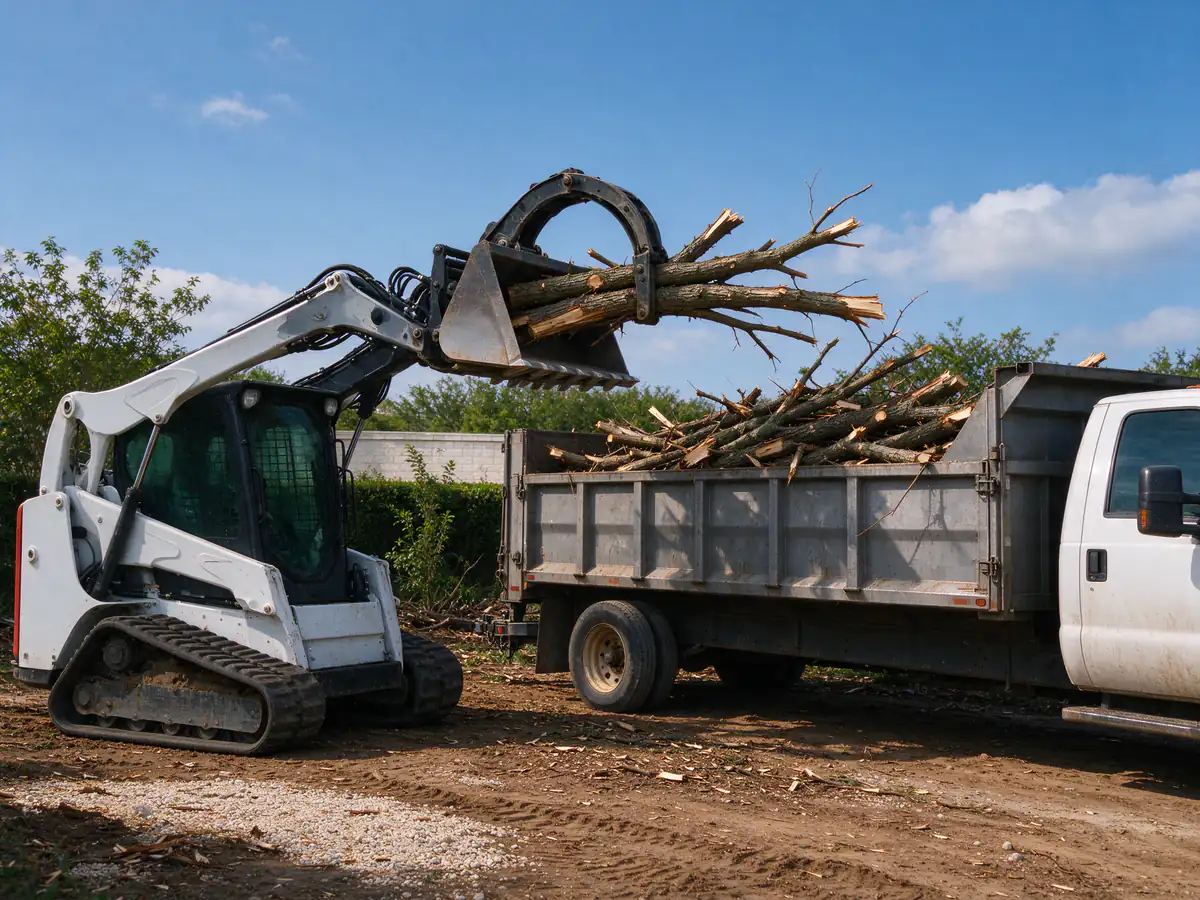
Representative photos of this type of work, not photos of specific completed jobs.