
Last Updated:
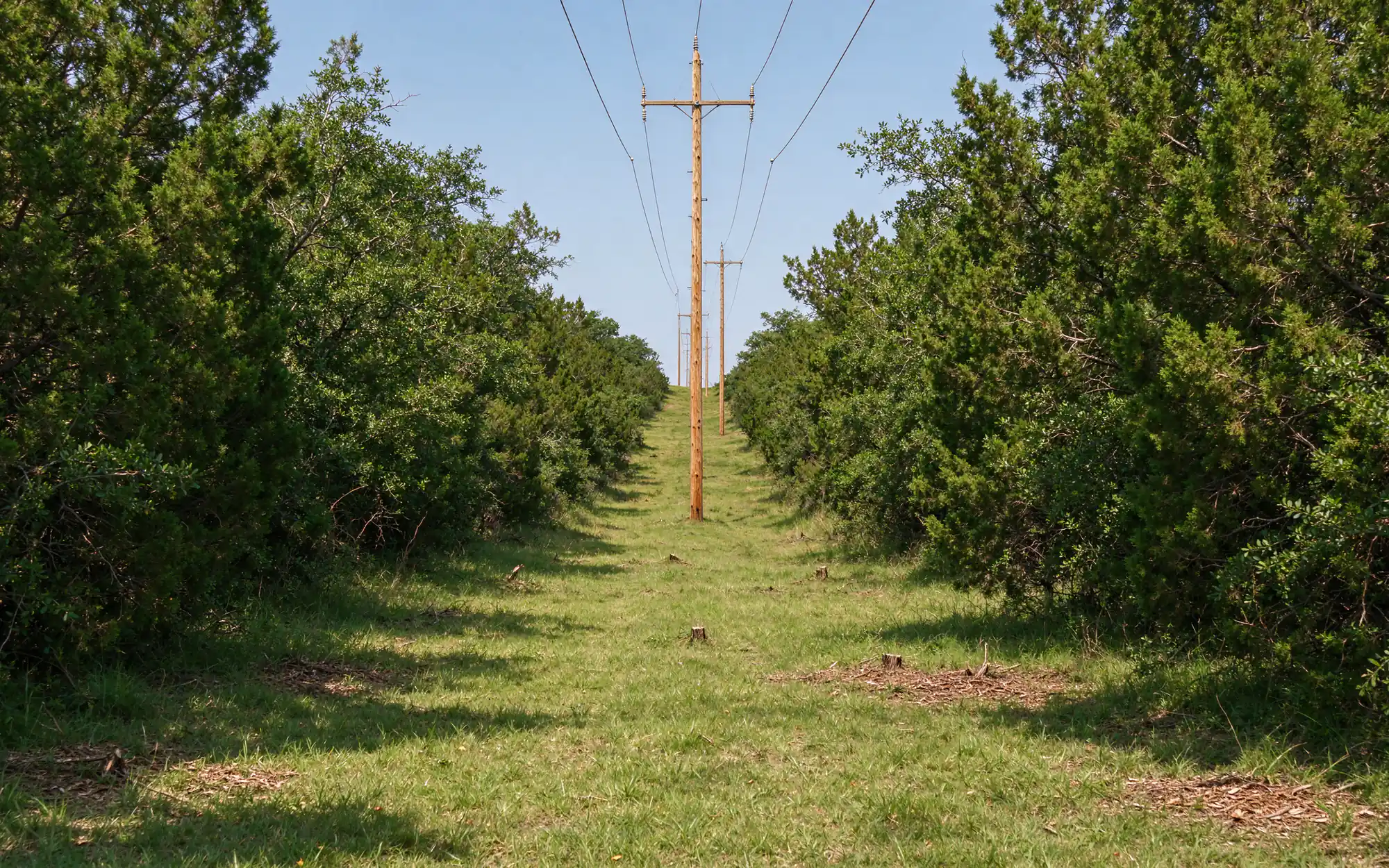
Easement clearing sits where private land meets someone else’s rights. A strip across your acreage may carry a power line, a water main, a pipeline or a neighbor’s driveway, and the brush in it still has to be managed by somebody. Homestead Land Clearing offers easement and right-of-way clearing on private property around Frisco and across Collin and Denton counties, with the work done by licensed and insured contractors. To be plain about the limits: this is clearing for landowners, not utility line-clearance work. Nothing here involves energized lines. The first job on any easement is to work out who owns the ground, who holds the easement, and who is responsible for the vegetation. Most of the scope follows from those answers.
What happens on the first visit
An easement job starts with paperwork and a walk.
- Walk the property. The corridor edges, poles, markers, valves and manholes, slopes, wet crossings, fences, and what is buried or overhead.
- Check the rules for that address. The recorded easement or plat, whether the tree permit applies, creek or floodplain limits, City right-of-way permits, and utility locates through Texas811. In Frisco the City locates its own lines separately for permitted work in right-of-way and easements.
- Write the scope. Corridor length and width, method, finish level, stumps, debris plan and erosion control, in writing, before a price.
- Clear and hand off. The corridor is left at the agreed finish, ready for mowing, for the utility’s own work, or for the road builder.
Who maintains what in an easement
In most easements the landowner still owns the ground. The easement gives another party, a utility, a city or a neighbor, the right to use a strip of it for a stated purpose. Who clears the vegetation depends on the recorded document and on the type of easement. The guide on who is responsible for clearing an easement goes deeper, but the usual pattern runs like this.
Overhead power lines. The electric utility manages clearance around its own lines. Anything near the wires is the utility’s work. Oncor’s guidance is to stay and keep materials at least 10 feet from overhead high-voltage lines and to contact Oncor about trees near its lines. Electric service around Frisco is not all one provider: the Town of Prosper, for example, lists Oncor, CoServ and Grayson-Collin Electric Cooperative as electric providers, so which utility to call depends on the address. Homeowners report that many general tree and clearing outfits are not equipped or insured for line-clearance work, which is exactly why it belongs with the utility. The guide to clearing near utilities and power lines covers how to coordinate.
Buried utilities and City lines. The owner of the line maintains its own facility, but routine mowing and code compliance usually stay with the landowner. Frisco Code Enforcement limits ground vegetation to 12 inches and expects alleys and sidewalks kept free of overhanging limbs, easement or not.
Private access easements. A shared driveway or access road across someone’s land is governed by the easement wording. Some documents assign upkeep to the user, some split it, and older ones are often silent.
Frisco rules inside easements
Frisco’s tree code gives franchised utilities a specific right: they may remove protected trees that interfere with service in accepted easements and right-of-way, with a permit except in emergencies. That right is the utility’s. A private owner clearing the same easement remains under the ordinary tree rules, which in Frisco means a Tree Removal Permit for any tree off platted single-family or two-family lots, with protected trees starting at 6 inches in diameter at 4.5 feet. The Frisco tree removal permit guide has the details.
Work inside City right-of-way or easements needs a City right-of-way permit. Frisco’s own water and sewer lines are not part of the Texas811 process: the City locates them in right-of-way and easements only for contractors with an active right-of-way, TxDOT or irrigation permit, and only for digging deeper than 18 inches. It does not locate on private property. Separately, Texas law treats mechanized work that disturbs soil 16 inches deep or more as excavation, which needs a Texas811 notice at least 48 hours ahead, excluding weekends and holidays. Pulling stumps in an easement usually crosses that line. Mulching at ground level usually does not, which is one reason easement corridors are often mulched rather than grubbed.
Floodplain easements carry their own rule. Frisco requires a grading permit or a City letter before trees or vegetation in the floodplain or floodway are removed, and vegetation in City-accepted easements is exempt only with written City authorization. Along Lewisville Lake, the U.S. Army Corps of Engineers holds a flowage easement up to the 537-foot contour, and written Corps permission is required for any work inside it. Clearing near creeks and floodplain explains both.
Clearing access roads and private rights-of-way
Access corridors are the most common easement clearing a private owner needs: a route to the back of a tract, a shared drive to a landlocked parcel, or a path for a future utility extension. The scope sets the corridor width, the overhead clearance for trucks, and how stumps are handled along the road path. Stumps in the wheel path need to come out or be ground well below grade, while the shoulders can often be mulched. Building the road itself, grading, base and drainage, is a separate trade. The clearing leaves the corridor ready for that contractor.
Corridors also need upkeep. Mesquite resprouts from a bud bank below ground (Texas A&M AgriLife), so a mesquite-choked easement cleared once will need follow-up. Eastern redcedar is a non-resprouting juniper, according to AgriLife, so a cedar cut below its lowest green limbs does not return. Does brush grow back after clearing explains maintenance intervals by species. For longer corridors through brush, forestry mulching leaves a mulch layer that holds the soil, and brush clearing covers lighter growth.
What easement clearing costs
No public source sets a per-acre rate for private easement clearing. The closest local data is public. On large right-of-way brush removal contracts in the Texas Department of Transportation’s Dallas district, which includes Collin and Denton counties, brush clearing ran about $1,200 to $2,000 per acre. That is big, open, accessible acreage with no tree protection or permits, so it is context rather than a price for a private corridor.
For smaller jobs, HomeGuide’s national brush clearing tiers are a budgeting guide: light brush $800 to $1,800 per acre, heavy brush $1,600 to $3,000, and wooded $2,500 to $5,000. The drivers that move an easement price are the corridor width and length, vegetation density, whether stumps are pulled or left low, utility conflicts and the locates or permits they bring, access at each end, and where the debris goes. On a long corridor, debris haul distance can matter as much as the clearing itself. Land clearing debris removal covers disposal, and what a land clearing quote should include helps compare written scopes. For easements that are part of a development, see commercial land clearing.
What's included
- A walk of the corridor to find its edges, poles, markers, valves, manholes and anything buried or overhead
- A review of the recorded easement or plat with you, to see who holds the easement and what it allows
- A check of the rules: tree permit status, floodplain limits, City right-of-way permits and utility locates
- A written scope giving corridor length and width, method, stump handling, finish level and debris plan
- Cutting or mulching of brush, vines and saplings inside the agreed corridor
- Removal of trees in the corridor that are not protected, or that are covered by a permit
- Clearing of private access easement corridors ahead of a separate road or driveway contractor
- Debris mulched in place, chipped or hauled to a permitted facility
Common easement types on private land and who handles the vegetation
| Overhead power line easement | Buried utility or City water and sewer easement | Private access easement | |
|---|---|---|---|
| Who usually maintains it | The electric utility manages clearance around its own lines | The utility or City for its own facilities; the owner for routine mowing and code | Set by the easement document; often the party who uses the access |
| What a private contractor can clear | Ground-level brush well away from the lines; nothing within 10 feet of the wires | Surface brush and small trees, with locates and any City right-of-way permit first | The full corridor within the easement width, once the line is confirmed |
| Who to call first | The electric provider for that address (Oncor, CoServ or a cooperative) | Texas811, and in Frisco the City's own locate service for permitted work | The other party to the easement, and a surveyor if the edges are unclear |
| Typical method | Mowing or mulching at ground level, outside the line clearance zone | Mulching or cutting with stumps left low rather than pulled | Clearing and stump removal along the road path, handed to the road builder |
| Main risk | Contact or arcing near energized lines | Striking a shallow line while grubbing | Clearing past the easement onto a neighbor's land |
Related resources
- LearnWho is responsible for clearing an easement?
- LearnHow do you clear land safely near power lines and buried utilities?
- LearnCan you clear land in a floodplain or near a creek?
- LearnWhen do you need a City of Frisco tree removal permit?
- LearnDoes brush grow back after clearing?
- Decision GuideWhat should a land clearing quote include?
Representative photos of this work
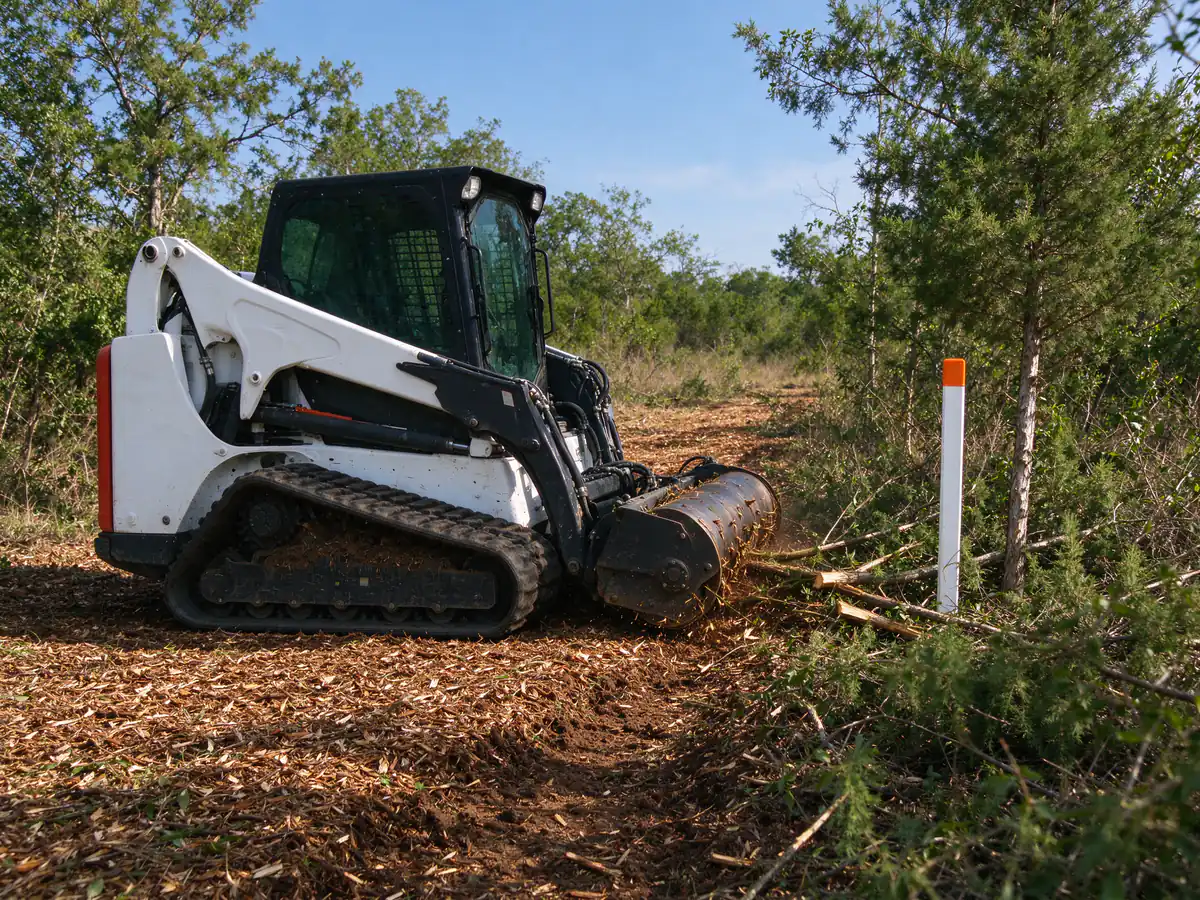
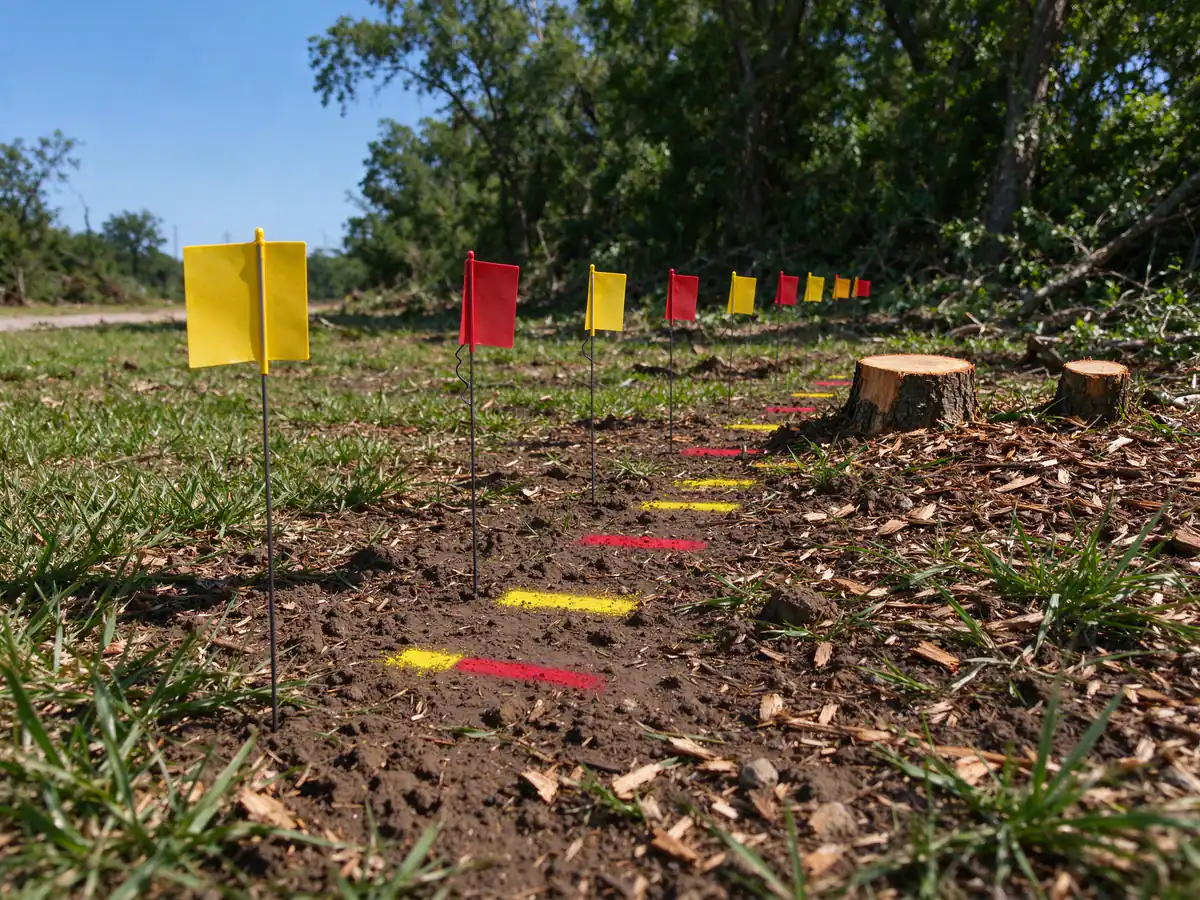
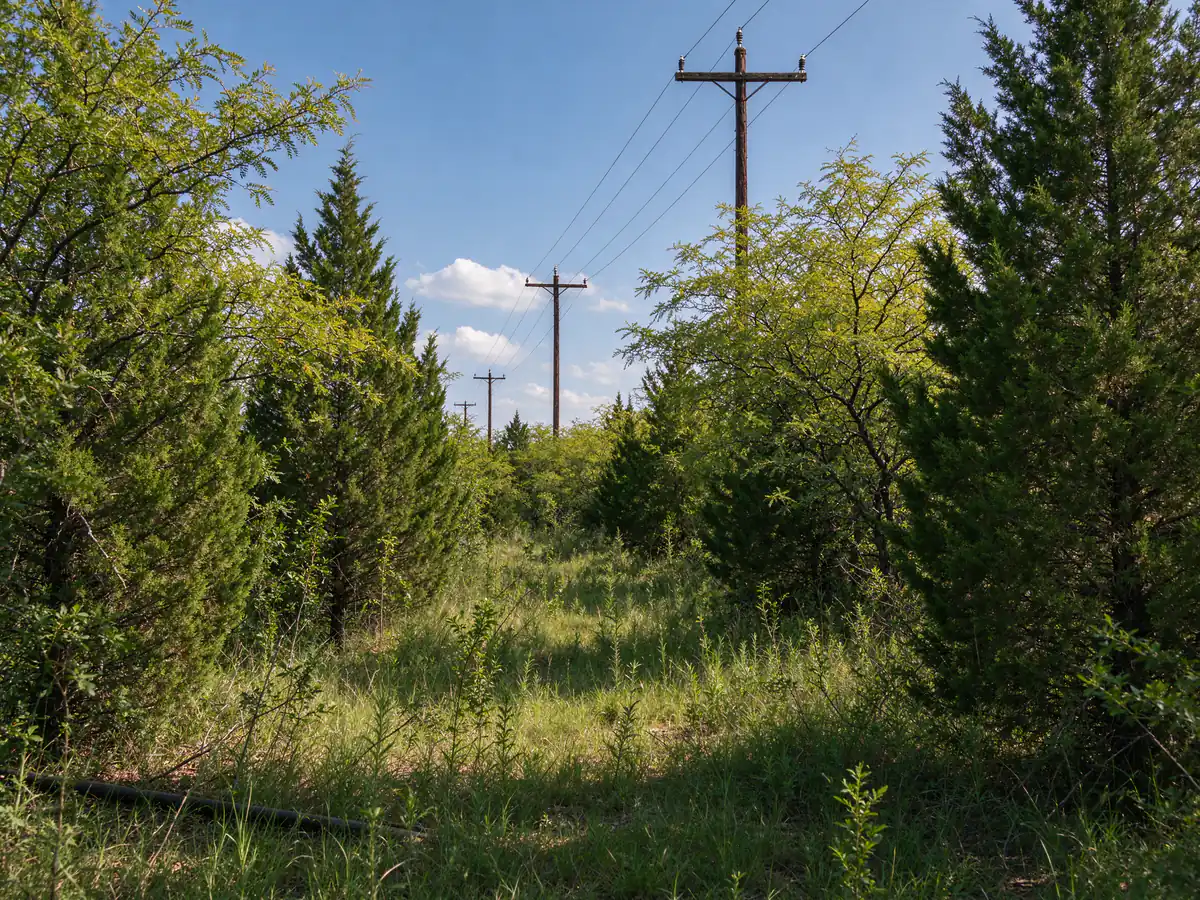
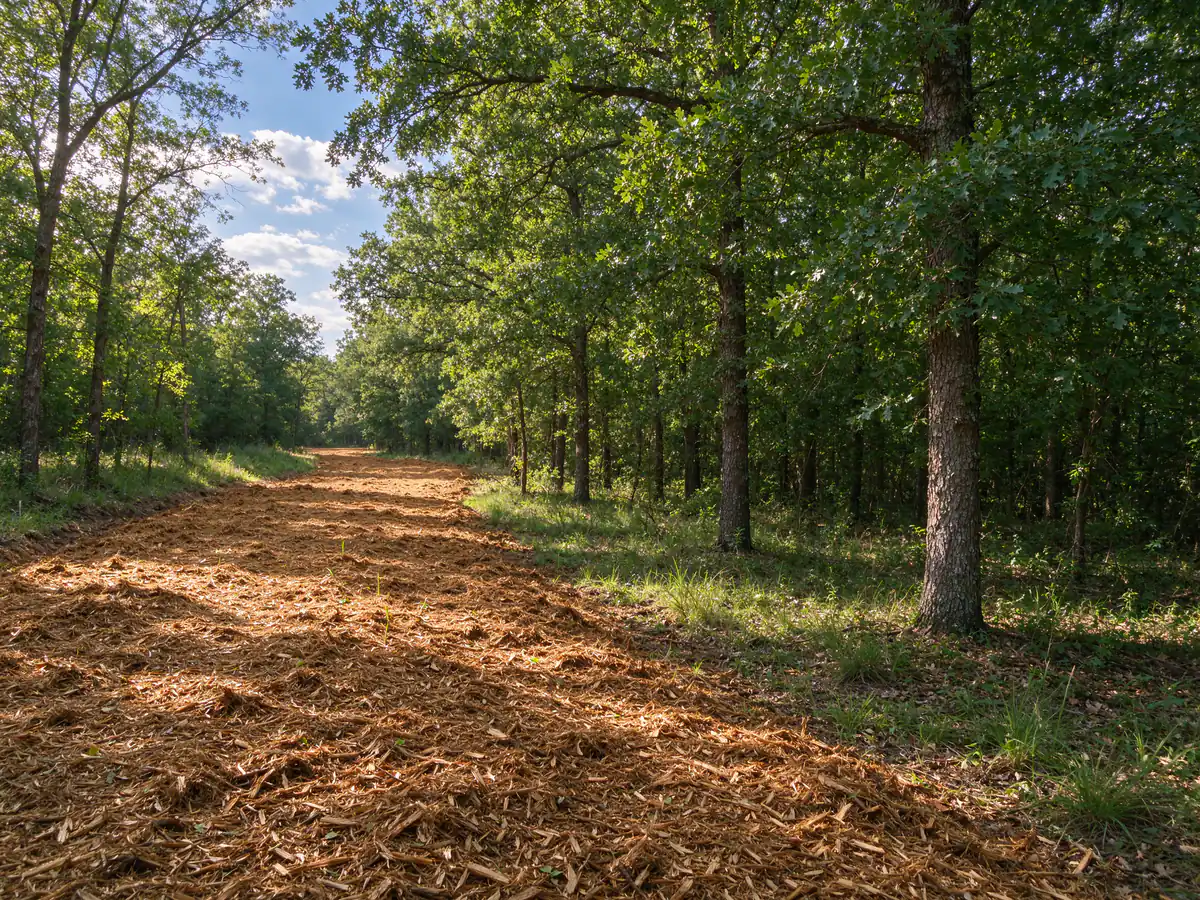
Representative photos of this type of work, not photos of specific completed jobs.