Last Updated:
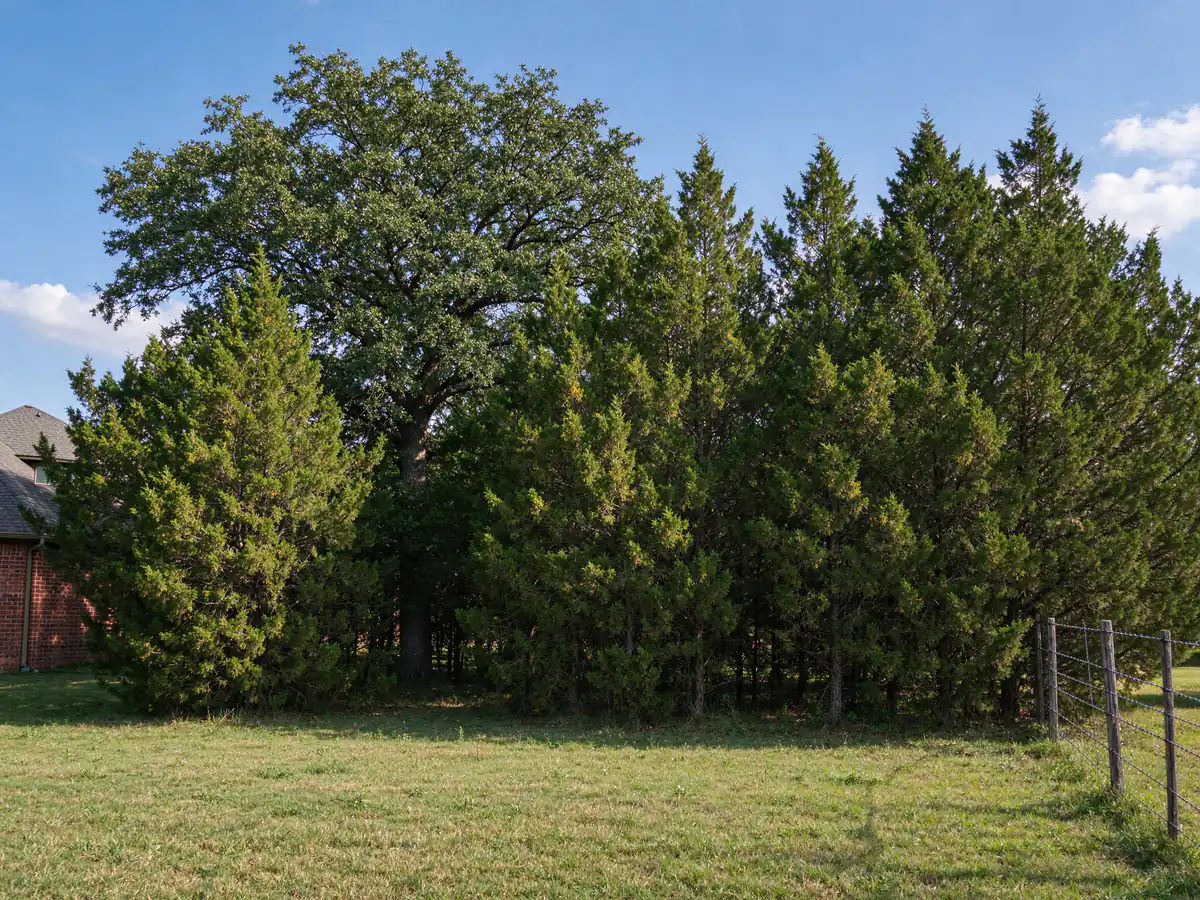
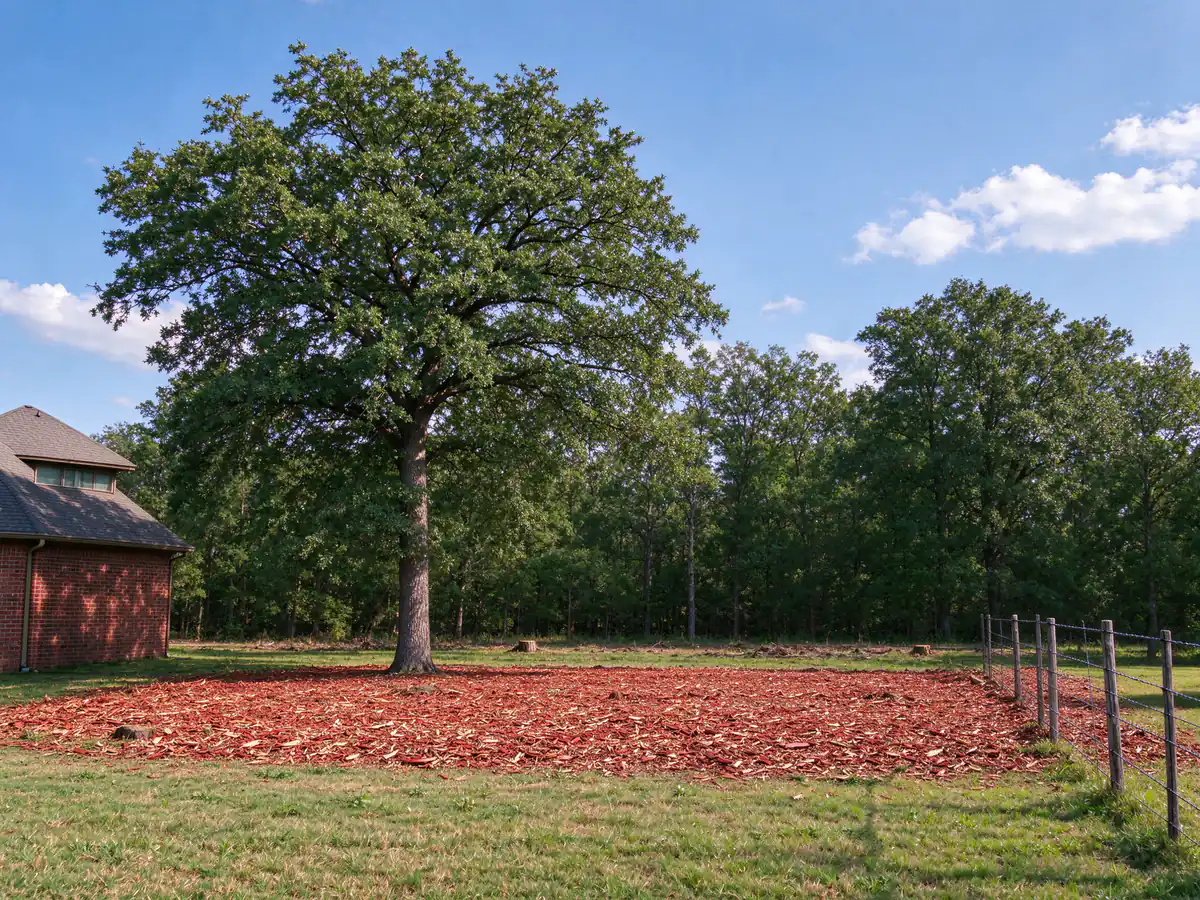
Forestry mulching grinds brush and small trees where they stand and leaves the material on the ground as mulch. There are no burn piles and no haul trucks, and much less bare soil than with a dozer. Homestead Land Clearing offers forestry mulching across Frisco and the wider Collin and Denton County area, for residential acreage and commercial sites, with the work done by licensed and insured contractors. It is the method most owners picture when they want cedar and undergrowth gone and the land kept as yard, pasture or woods. It is also the method most often sold for the wrong job. Mulching leaves roots in the ground and a layer of wood on top, which is perfect for a trail and wrong for a house pad. Knowing which side of that line your project sits on is most of the decision.
What happens on the first visit
The first visit decides whether mulching fits and where it stops. These are the planned steps.
- Walk the property. Boundaries, the trees you want to keep, slopes, wet spots, fences, and what is buried or overhead.
- Check the rules for that address. Whether the City’s tree permit applies, creek or floodplain limits, burn options, and utility locates through Texas811. In Frisco the City locates its own lines separately for permitted work.
- Write the scope. Method, finish level, stumps, debris plan and erosion control, in writing, before a price.
- Clear and hand off. The ground is left at the agreed finish, ready for seeding, grazing or the next trade.
How a forestry mulcher works: drum vs disc
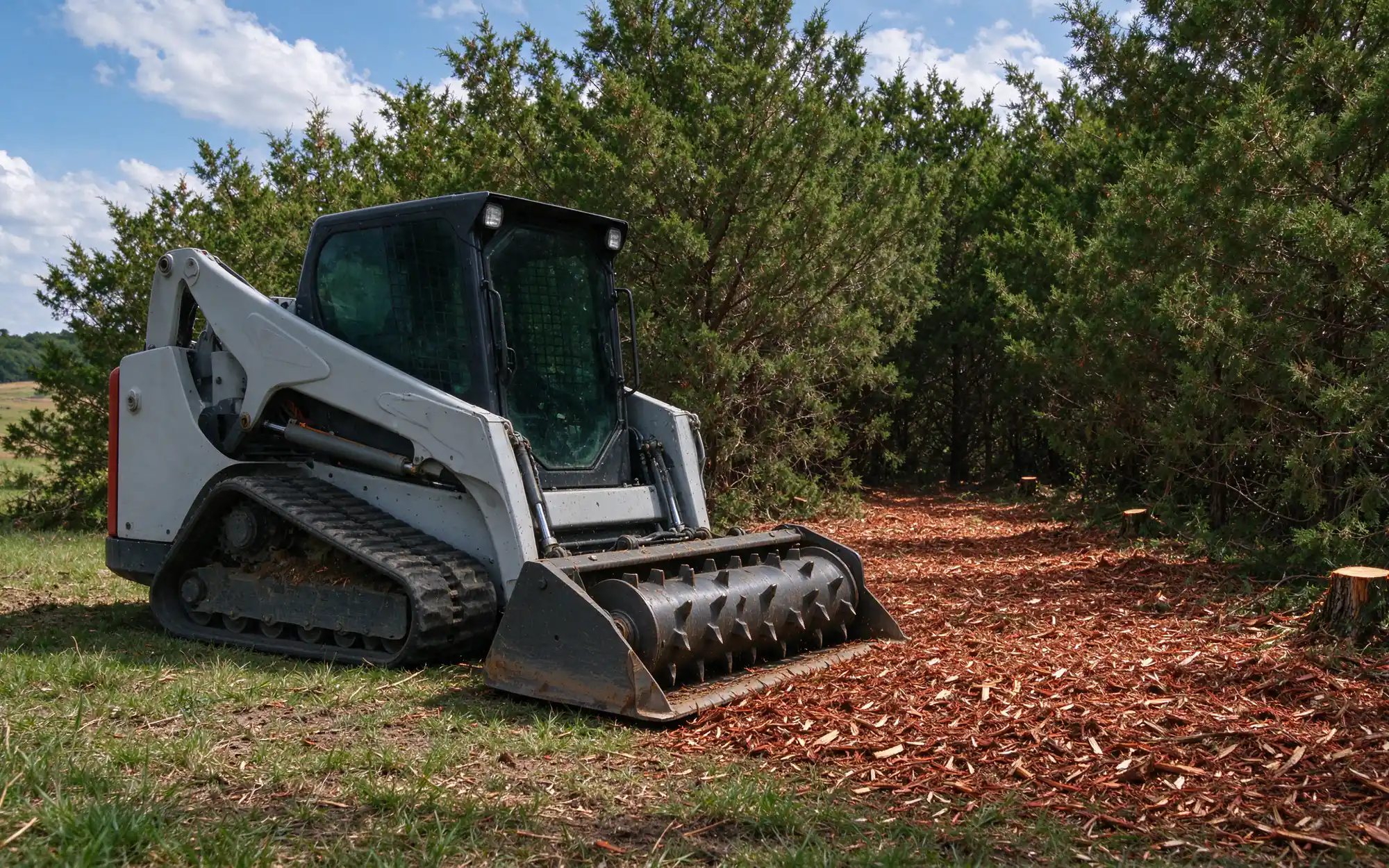
A forestry mulcher is a heavy cutting head, usually mounted on a compact track loader or a dedicated tracked carrier, sometimes on an excavator arm for slopes and creek banks. The head comes in two main designs, and they leave different results.
A drum mulcher uses a horizontal drum lined with fixed teeth or hammers. The operator lowers it onto a cedar or sapling and chews it down from the top, then can work the stump toward the ground. Drum heads produce finer, more even mulch and throw less material, which makes them the usual pick around fences, houses and roads.
A disc mulcher spins a heavy toothed disc at high speed and cuts standing stems almost like a saw. It moves quickly through open stands of small trees, but the chips are coarser and get thrown farther, so it needs more room and leaves a rougher finish.
Head size, carrier horsepower and tooth condition all change what diameter of tree a machine can handle and how fast it goes, which is why the scope should name the largest stem size included. Larger trees may need to be felled first, or left. Where mature trees sit inside the area, selective clearing plans the machine routes around them.
What forestry mulching leaves behind
This is the part to read twice. A mulched site is not a grubbed site.
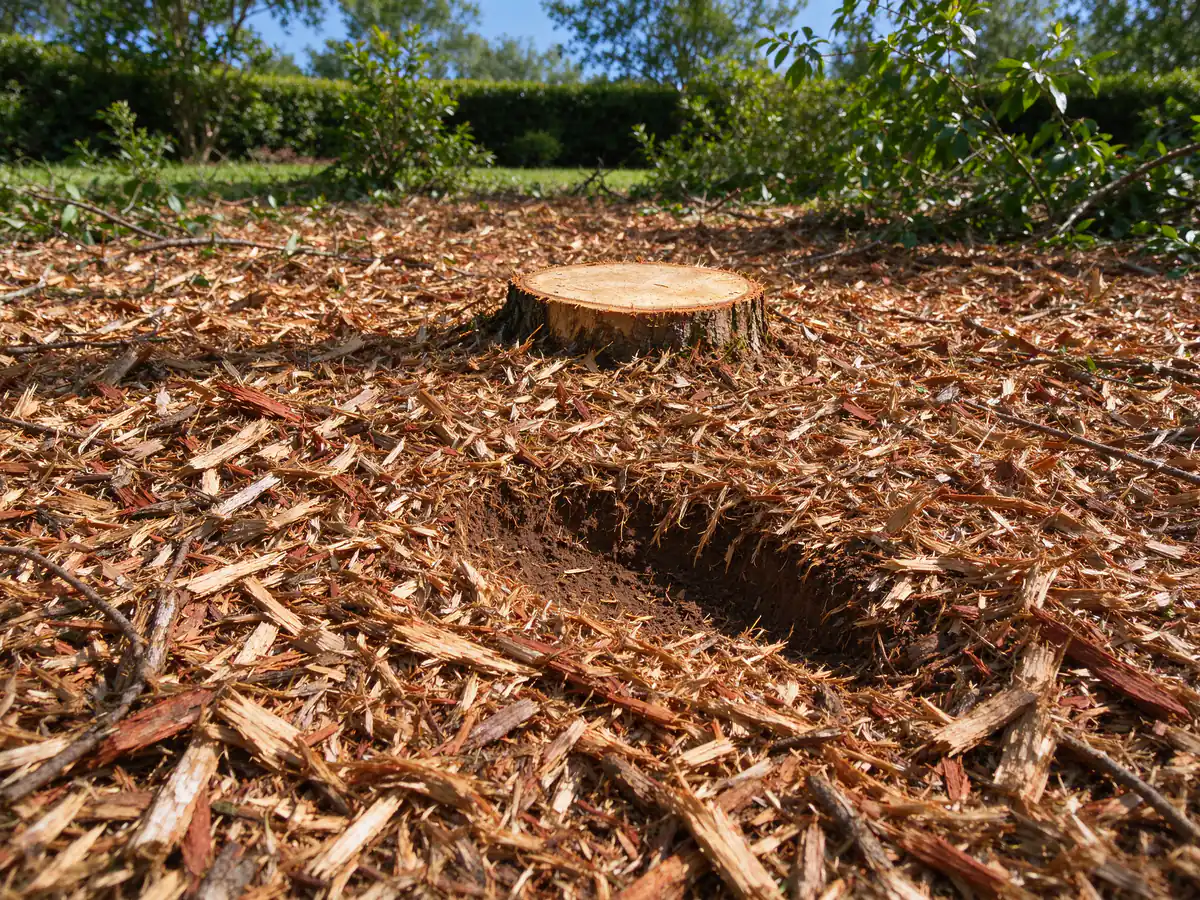
- Stumps stay, cut near the surface. The head grinds stumps down close to grade, but not below it the way a stump grinder does. On ground that will be mowed, the stump height matters, and it belongs in the scope.
- Roots stay in the soil. Nothing is pulled. For cedar that is fine: Texas A&M AgriLife classes eastern redcedar as a non-resprouting juniper, so a stem mulched below its lowest green growth does not come back from the root. For mesquite, hackberry and most other hardwoods it is a problem. AgriLife describes mesquite’s belowground bud bank, and mulched mesquite usually returns as a multi-stem clump. Read does brush grow back after clearing before choosing mulching for a mesquite pasture.
- A layer of mulch covers the ground. It shields bare soil from rain, holds moisture and breaks down over time.
That combination is why mulching does not belong under a slab, a driveway or fill. Roots and wood decay and leave soft spots, and a builder will want those areas grubbed. For anything structural, see clearing and grubbing and stump grinding and removal.
Mulch depth and getting grass back
The depth of the mulch depends on how much was standing. Light undergrowth leaves a thin scatter, and grass comes through it within a season. A thick cedar stand can leave a mat deep enough to smother grass until it breaks down. Where the layer is heavy, spreading it thinner helps, and bare patches can be seeded; silt fence and seeding are available as add-ons. On sloped ground near a creek, the mulch layer is one of the better erosion covers you can leave, provided it is not piled where water will carry it into the channel.
Wet clay, slopes and the limits of the method
Most of Frisco sits on Houston Black and Austin clays, which USDA NRCS soil data rates as high shrink-swell. Saturated, they turn soft and sticky. A tracked mulcher spreads its weight better than a wheeled machine, but it still ruts wet clay, and every turn on soft ground tears it up more. NOAA’s 1991 to 2020 normals for DFW Airport put the wettest months in May (4.78 inches) and October (4.37 inches). The guide to clearing wet clay ground explains why waiting a few dry days is usually the cheaper choice.
Other limits are physical. Rock and old concrete wreck mulcher teeth. Barbed wire buried in a fence row wraps around a drum. Steep creek banks may need an excavator-mounted head or hand cutting instead. In Frisco, removing vegetation in a mapped floodplain or floodway needs a grading permit or a City approval letter, with fines that apply to the contractor as well as the owner; the guide on clearing near creeks and floodplain covers that. Under protected trees on land the City’s tree ordinance covers, clearing inside the drip line is allowed only by hand or with mowers on turf tires, where approved, so a mulcher stays outside.
Trails, views and fire breaks
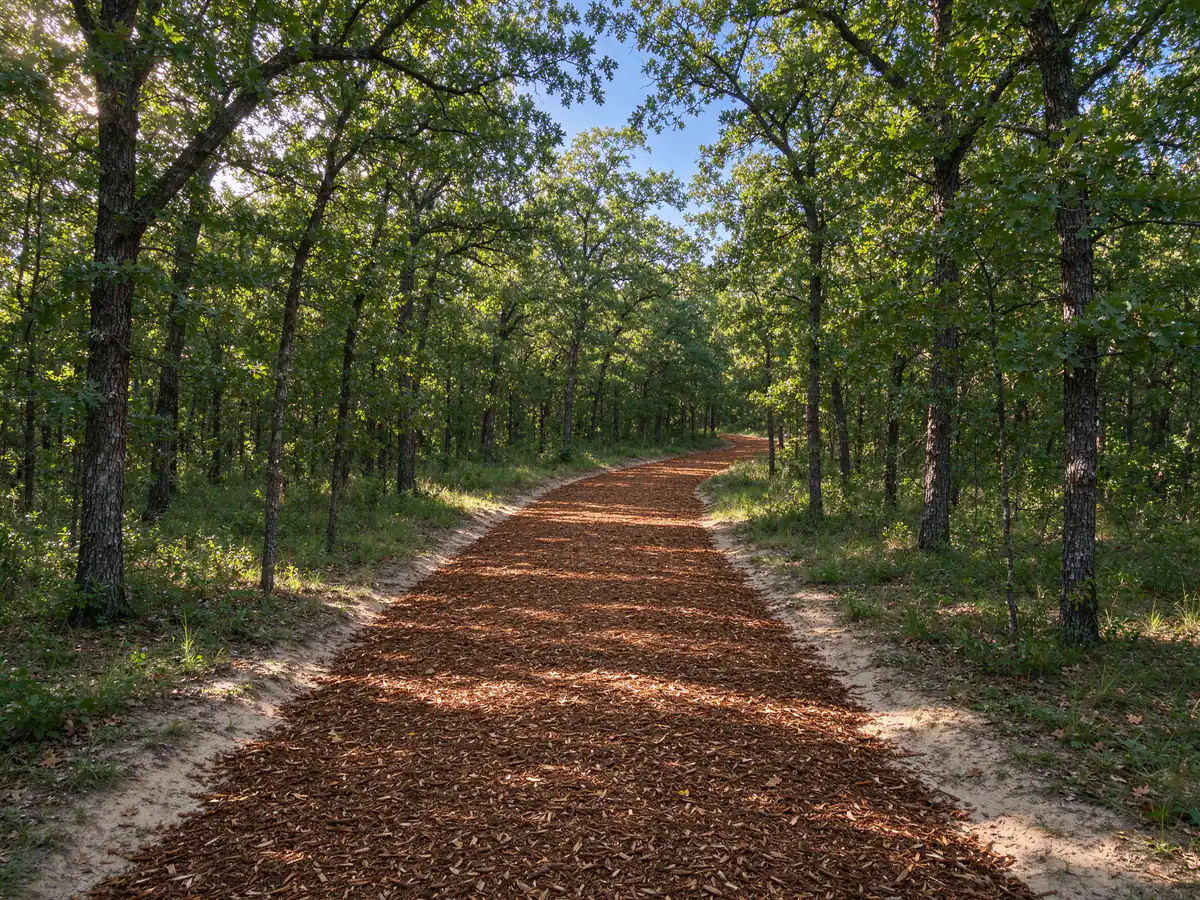
Mulching does its best work where the goal is open ground rather than bare ground. Walking and ATV trails through cedar, sightlines to a pond or across a pasture, and cleared understory under oaks all suit it, because the mulch protects the soil and nothing has to leave the property.
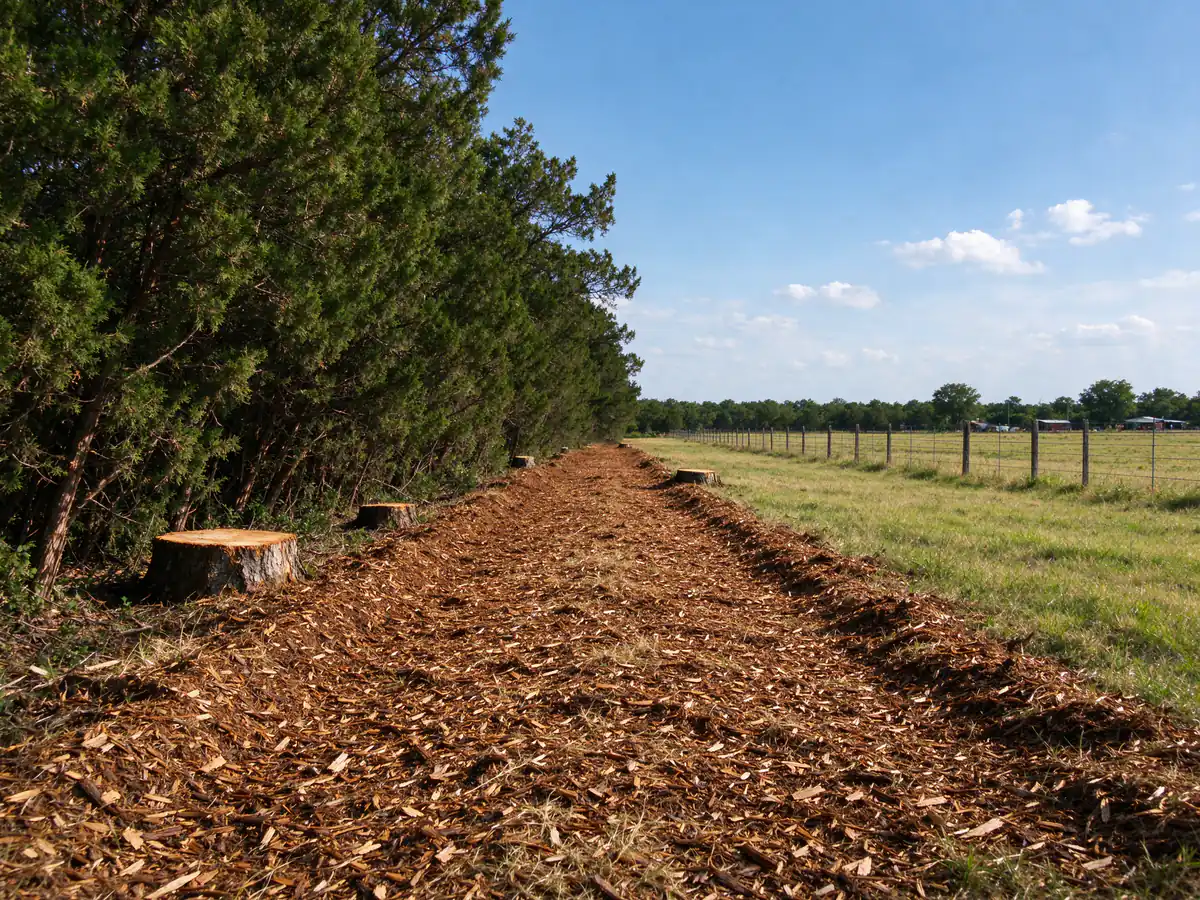
Fire breaks are a growing reason for rural owners to call. Dense cedar burns hot, and a mulched strip around a house, barn or property line takes away the ladder of fuel. Texas A&M Forest Service publishes guidance on defensible space, and the post on fire breaks around rural homes goes through the planning. Mulching a break is not a substitute for keeping it maintained: grass and new brush move back in, so it needs mowing or a fresh pass every few years.
What forestry mulching costs
As a national budgeting figure, HomeGuide lists forestry mulching at $500 to $1,000 or more per acre, and $125 to $300 per hour with operator (HomeGuide, national). North Texas quotes commonly run higher than the national figure, especially for small acreage and thick cedar. What moves the price:
- Stem size and density. Thick cedar with large trunks takes far longer per acre than undergrowth.
- Acreage. Moving a mulcher to a site costs the same for half an acre as for ten, so small jobs cost more per acre.
- Ground and access. Wet clay, slopes, rock and tight gates all slow production.
- Hand work. Fence rows, keeper trees and structures need saws, not the head.
- Add-ons. Stump grinding below grade, seeding and silt fence are separate lines.
Because the mulch stays, there is usually no haul-off or tipping cost, which is often why mulching beats cut-and-haul on dense brush. The forestry mulching vs land clearing guide compares the two, land clearing cost per acre puts the numbers in context, and what a land clearing quote should include helps compare written scopes. For brush that has to leave the property, see brush clearing.
What's included
- A walk of the property to mark the mulching limits, trees to keep, fences, wet spots and anything buried or overhead
- A check of the rules for that address: tree permit status, creek and floodplain limits, and utility locates
- A written scope naming the areas to mulch, the largest stem size, the finish height of stumps and how the mulch will be left
- Mulching of brush, cedar, vines, saplings and small trees inside the agreed limits
- Trail, path or fire-break corridors cut to the width written in the scope
- Hand cutting around keeper trees, fences and structures where the mulching head cannot work safely
- Spreading of heavy mulch piles so the layer is even
- Seeding as an add-on where bare soil shows through
Drum mulcher, disc mulcher or cut and haul: what each leaves behind
| Drum mulcher | Disc mulcher | Cut, pile and haul | |
|---|---|---|---|
| How it grinds | A horizontal drum with fixed teeth chews brush and trees from the top down and can grind stumps toward grade | A heavy spinning disc with teeth cuts standing stems fast and throws the chips | Saws and a cutter take growth down; a grapple loads it for removal |
| Mulch texture | Finer, more even mulch | Coarser chips, thrown farther | No mulch left; bare or leaf-covered ground |
| Best fit | Mixed cedar thickets, undergrowth and areas that need a tidy finish | Open stands of small trees where speed matters more than finish | Areas that will be built on, or where mulch is not wanted |
| Near fences, houses and roads | Easier to control; less thrown material | Throw zone needs more room | Hand and grapple work can get close |
| What stays in the ground | Roots and stumps cut near grade | Roots and stumps, often slightly taller | Roots and stumps unless grubbing is added |
Related resources
- Decision GuideForestry mulching vs land clearing: which one does your property need?
- LearnDoes brush grow back after clearing?
- LearnCan you clear land on wet clay soil in North Texas?
- Cost GuideHow much does land clearing cost per acre in North Texas?
- Decision GuideWhat should a land clearing quote include?
Representative photos of this work
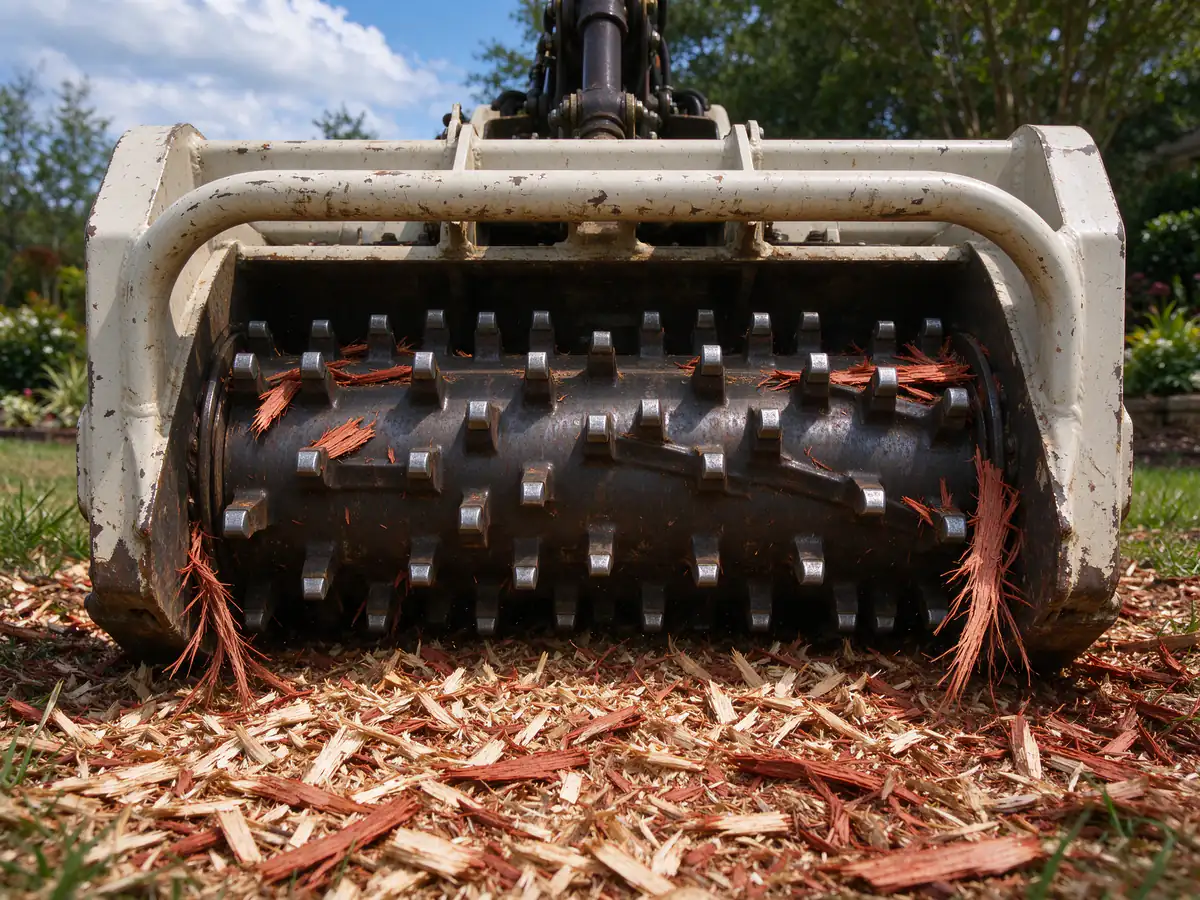
Representative photos of this type of work, not photos of specific completed jobs.
Before and after (representative)